链队列
Created|Updated
|Post Views:
前言
链队列就是限制了只能在首端和尾端进行插入,删除操作的表。
1
2
3
4
5
6
7
8
9
10
| typedef struct QNode
{
ElementType data;
struct QNode *next;
}QNode, *QNodePtr;
typedef struct ListQueue
{
QNodePtr front, rear;
}ListQueue, *ListQueuePtr;
|
- 空队列判断条件 front和rear同时指向头节点
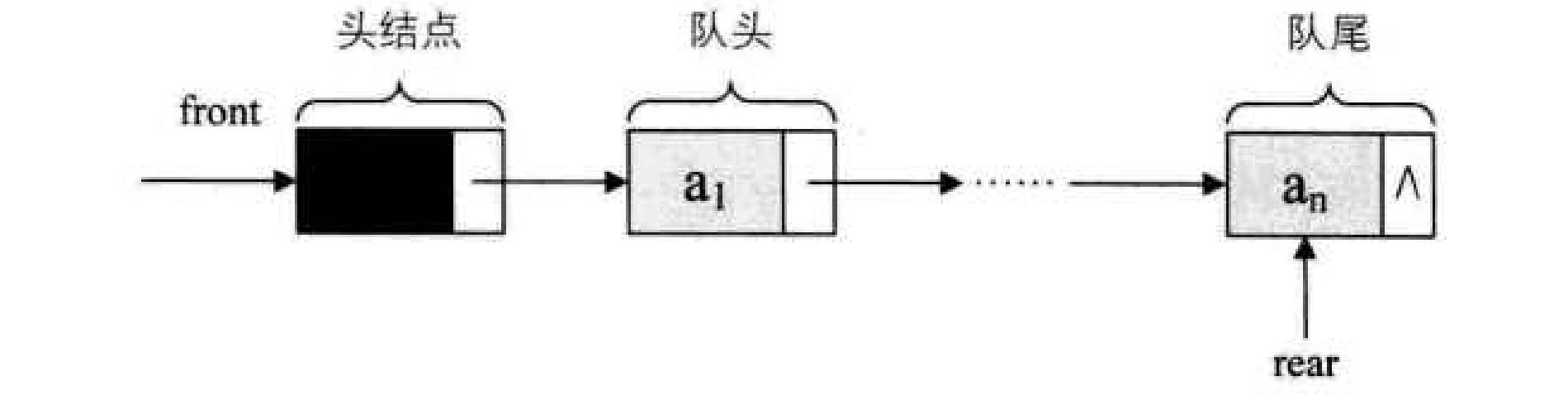
操作
插入
1
2
3
4
5
6
7
8
9
10
11
12
13
| void EnQueue(ListQueuePtr Q, ElementType e)
{
QNodePtr P = (QNodePtr)malloc(sizeof(QNode));
if(P == NULL)
{
fprintf(stderr, "Out of space.");
exit(1);
}
P->data = e;
P->next = NULL;
Q->rear->next = P;
Q->rear = P;
}
|
删除
1
2
3
4
5
6
7
8
9
10
11
12
13
14
15
| void DeQueue(ListQueuePtr Q, ElementType *e)
{
QNodePtr P;
if(Q->front == Q->rear)
{
fprintf(stderr, "The queue is empty.");
exit(1);
}
P = Q->front->next;
*e = P->data;
Q->front->next = P->next;
if(Q->rear == P)
Q->rear = Q->front;
free(P);
}
|
示例
1
2
3
4
5
6
7
8
9
10
11
12
13
14
15
16
17
18
19
20
21
22
23
24
| #ifndef _l_queue_h_
typedef int ElementType;
typedef struct QNode
{
    ElementType data;
    struct QNode *next;
}QNode, *QNodePtr;

typedef struct ListQueue
{
    QNodePtr front, rear;
}ListQueue, *ListQueuePtr;
void InitQueue(ListQueuePtr Q);
void EnQueue(ListQueuePtr Q, ElementType e);
void DeQueue(ListQueuePtr Q, ElementType *e);
void Traverse(ListQueuePtr Q);
#endif
|
1
2
3
4
5
6
7
8
9
10
11
12
13
14
15
16
17
18
19
20
21
22
23
24
25
26
27
28
29
30
31
32
33
34
35
36
37
38
39
40
41
42
43
44
45
46
47
48
49
50
51
52
53
54
55
| #include<stdio.h>
#include<stdlib.h>
#include "l_queue.h"
void InitQueue(ListQueue *Q)
{
Q->front = Q->rear = (QNodePtr)malloc(sizeof(QNode));
if(Q->front == NULL)
{
fprintf(stderr, "Out of space.");
exit(1);
}
Q->front->next = NULL;
}
void EnQueue(ListQueuePtr Q, ElementType e)
{
QNodePtr P = (QNodePtr)malloc(sizeof(QNode));
if(P == NULL)
{
fprintf(stderr, "Out of space.");
exit(1);
}
P->data = e;
P->next = NULL;
Q->rear->next = P;
Q->rear = P;
}
void DeQueue(ListQueuePtr Q, ElementType *e)
{
QNodePtr P;
if(Q->front == Q->rear)
{
fprintf(stderr, "The queue is empty.");
exit(1);
}
P = Q->front->next;
*e = P->data;
Q->front->next = P->next;
if(Q->rear == P)
Q->rear = Q->front;
free(P);
}
void Traverse(ListQueuePtr Q)
{
QNodePtr P = (QNodePtr)malloc(sizeof(QNode));
P = Q->front->next;
while (P != NULL)
{
printf("%d ", P->data);
P = P->next;
}
}
|
1
2
3
4
5
6
7
8
9
10
11
12
13
14
15
16
| #include<stdio.h>
#include<stdlib.h>
#include "l_queue.h"
int main()
{
ListQueue Q;
InitQueue(&Q);
for(int i = 0; i < 4; i++)
{
EnQueue(&Q, i);
}
int *e;
DeQueue(&Q, e);
Traverse(&Q);
}
|