线性表的顺序存储结构
Created|Updated
|Post Views:
前言
线性表有一种物理结构叫顺序存储结构。它由一系列连续的存储单元组成,从而使得逻辑上相邻的两个元素也连续。
- 这样的结构可以使用一维数组来实现。数组的下标从0开始,但我们的元素是从1开始。所以,我们可以这样看:元素均对应,但标志不一样(只需在用[]时,-1即可)
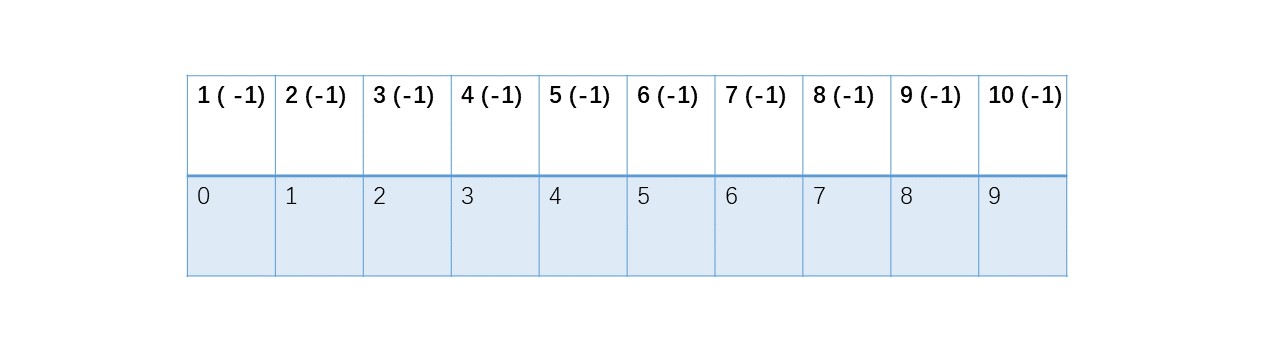
1
2
3
4
5
| #define MaxSize 50
typedef struct{
ElemType data [MaxSize] ;
int length;
}SqList;
|
注意线性表长度和数组长度不同
操作
Insert
- 如果线性表长度等于数组长度,退出
- 如果插入到线性表长度+1以外,退出
- 如果不是插到最后(length + 1),那么for,从最后一个元素到第i个,一个个往后退
Delete
- 如果线性表为空,退出
- 如果删除表以外的数据,退出
- 如果不是删除最后位置,for,从i+1到length一个个向前移
示例
11
2
3
4
5
6
7
8
9
10
11
12
13
14
15
16
17
| #define TSIZE 45
#define MAXSIZE 100
struct film
{
char title[TSIZE];
int rating;
};
typedef struct film Item;
typedef struct list
{
Item entries[MAXSIZE];
int items;
} List;
|
21
2
3
4
5
6
7
8
9
10
11
12
13
14
15
16
17
18
19
20
21
22
23
24
25
26
27
28
29
30
31
32
33
34
35
36
37
38
39
40
41
42
43
44
45
46
47
48
49
50
51
52
53
54
55
56
57
58
59
60
61
62
63
64
65
66
67
68
69
70
71
72
73
74
75
76
77
78
79
80
81
82
83
84
85
86
87
88
89
90
91
92
93
94
95
96
97
98
99
| #include<stdio.h>
#include<stdlib.h>
#include<stdbool.h>
#define MAKESIZE 20
typedef int Elememnt;
typedef struct Node *PtrToNode;
typedef PtrToNode List;
typedef PtrToNode Position;
struct Node
{
Elememnt e[MAKESIZE];
int length;
};
void InitList(List L)
{
L->length = 0;
}
bool ListEmpty(List L)
{
if(L->length == 0)
return true;
else
return false;
}
void ClearList(List L)
{
L->length = 0;
}
int ListLength(List L)
{
return L->length;
}
Elememnt GetElement(List L, int i)
{
return L->e[i - 1];
}
int LocateElement(int x, List L)
{
if(L->length == 0)
return 0;
for(int i = 0; i < L->length; i++)
{
if(x == L->e[i])
return i + 1;
}
return 0;
}
int Insert(List L,int i,Elememnt e)
{
int k;
if (L->length == MAKESIZE)
return 0;
if (i<1 || i > L->length + 1)
return 0;
if(i < L->length)
for(k=L->length-1;k>=i-1;k--)
L->e[k+1]=L->e[k];
L->e[i-1]=e;
L->length++;
return 1;
}
int DeElement(List L, int i)
{
if(L->length == 0)
return 0;
if(i < 1 || i > L->length)
return 0;
for(int j = i; j < L->length; j++)
L->e[j - 1] = L->e[j];
L->length--;
return 1;
}
void PrintList(List L)
{
for(int i = 0; i < L->length; i++)
printf("%d ", L->e[i]);
}
int main()
{
List L;
InitList(L);
for(int i = 0; i < 10; i++)
{
Insert(L , i + 1, i);
}
DeElement(L, 2);
PrintList(L);
}
|